
College students:
You can now minor in
the new field of
Woven-Fiber Technology
By Rick Doble
There is no college or university
that offers a full degree in this field
Yet many colleges will let you self-design a minor as you wish

FROM BASKETS TO SHIPS:
IT MAY HAVE TAKEN 100s OF THOUSANDS OF YEARS
IT MAY HAVE TAKEN 100s OF THOUSANDS OF YEARS
[TOP] A carry basket. using a simple design, made by the Xerente (Sherenté),
an indigenous people in Brazil.
an indigenous people in Brazil.
It may have taken more than half a million years for the skills needed to make this basic basket [TOP] to evolve into the skills needed to make this seagoing ship [BOTTOM] made of reeds that could carry 50 tons of cargo and sail the Persian Gulf
[BOTTOM] "Model of the reed boat Tigris, boat of Thor Heyerdahl."
This recreation of a Mesopotamian reed ship could carry 50 tons of cargo. Thor Heyerdahl built the full-scale ship to prove the seaworthiness of reed ships. He sailed the Tigris with no problems for 5 months in the Persian Gulf.
https://commons.wikimedia.org/wiki/File:Tigris_Model_Pyramids_of_Guimar.jpg
https://commons.wikimedia.org/wiki/File:Tigris_Model_Pyramids_of_Guimar.jpg
Many colleges, particularly liberal arts institutions with open curricula, offer significant flexibility in choosing a minor, allowing students to tailor their studies to unique, interdisciplinary interests.GOOGLE AI 5/9/2026
Formerly known as basket weaving
Woven-Fiber Technology
greatly expands the definition of weaving
to suggest that it was a critical technology in the development of human tool-making and survival
This new field covers not only baskets that were made worldwide beginning thousands of years ago, but also textiles, clothing, and cordage,
along with hundreds of woven objects and structures that were made by hundreds of cultures all throughout history. And woven-fiber technology continues and is important today with clothing, for example.
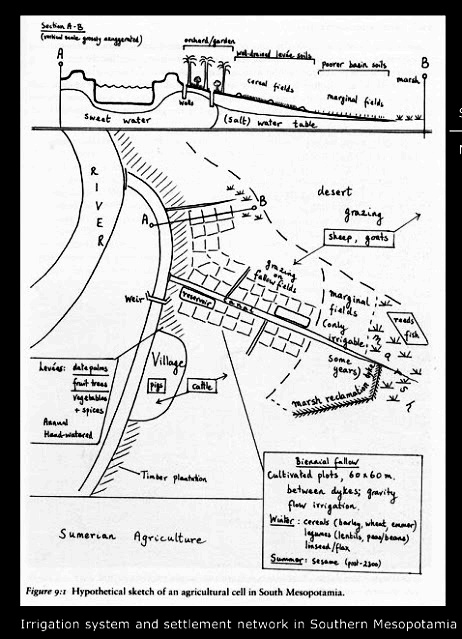
One clear example of the importance and widespread use of woven-fiber technology was the reed industry in early Mesopotamia, whose first cities in the world were built on reed technology with the production of large seafaring reed boats, fleets of small boats, huge buildings made entirely out of reeds, and tools to create and dredge canals along with reed devices that helped with irrigation and flood control. This is only one example, as woven-fiber technology was critical for Egypt, Greece, Rome, the Middle Ages in the west, and many other places in the East, such as India and China.
If you create a minor in Woven-Fiber Technology, you could be one of the first to tell an untold story of how woven-fiber technology was a key craft and technology that began thousands of years ago and continues to this day. With the power of the Internet, you can research woven-fiber technology developments that made early civilizations such as Rome and Greece possible, along with the building of cathedrals in the Middle Ages which were critical to the development of the modern world.
This technology continues to this day. The woven clothes we wear and the cloth we use probably developed from this technology along with the making of paper and with the many baskets and other containers that every family has and are essential.
A Personal Story: How I Put My Minor Together
When I was getting my Master's degree in Communication (it would now be called Media) at the University of North Carolina at Chapel Hill, a minor was required. I was interested in Anthropology, so I got permission to make that my minor if I could find a teacher in the Anthropology department who would work with me. I knew several students in that department, and they all recommended one professor who I liked a lot. Together, we designed and created three courses. The first course was to watch all the anthropology-related documentaries that the University had, which were a lot, and then write a paper about them. Next, I did a study of a very small town in North Carolina that had gone from nothing to a boom town, and then to a busted town. I had aerial photographs that I put together and then overlaid them on transparent sheets to show the changes in the town. The last course was an elaborate three-screen sound-slide show that showed the impact of building a dam and the people who had to be relocated. This project was really too big for one course, but we made it work.
Right now, many universities allow a student to self-design a minor when getting a B.A. or other degree. So today a student could minor in Woven-Fiber Technology. This option is often available at many universities. They could select from the courses I outlined, for example, or create their own set of courses. Check with your advisor, search your school's online information, and look in the school's catalogue.
"Relatively few tribes of American Indians understood pottery, except in the crudest form. As for basketry, it may be said that every Indian from the land of the Esquimaux [ED: land of the Inuit or people formerly known as Eskimos] down through Mexico was a basket weaver."American Indians: first families of the Southwest by Huckel.
The following are course ideas that you can modify, combine, or edit anyway you want. This article is covered by the Creative Commons copyright meaning that you can quote my writing directly and/or edit without permission from me. However, you do need to credit me, Rick Doble, and my blog, DeconstructingTime. This course list might help you start thinking about how you would like to put your self-designed minor together but these are only suggestions. Have fun and make your own program.
----------------------- COURSE IDEAS -----------------------
-- RANDOM BASKETS:
A course could begin with random basket weaving based on ideas derived from pictures of bird nests and other natural items like spider webs -- you would be asked to study such natural objects and then make a random basket or two from what you learned without a teacher's direction.
-- BASKETS WORLDWIDE:
With the help of the Internet, you can look at hundreds if not thousands of baskets from different areas of the world and from different times in history. There are many basket museums also. Study these baskets for the weave, the materials, the overall design, and their intended use. Write a paper with your observations.
-- COMBINING MATERIALS:
This course covers making objects in which weaving is only part of the item, such as a table that combines wood and weaving. For example, wood can provide the frame or the skeleton for an object like a chair, or a hamper; then woven fabric is woven around this skeleton.
-- TEXTILES:
This course includes a study of fabric, looms, and the cloths we wear, along with sails for sailing ships and sacks for carrying grain. The weaving of wide, large cloth was probably perfected in the Neolithic era with the invention of the Neolithic loom, along with a very sophisticated use of flax that was grown for the purpose of making linen. The method for processing flax into linen was quite complex and was still used until recently. Flax is perhaps the oldest cultivated plant whose fiber was used to make cloth. The history of textiles would fill many books, so a student will need to condense this history or focus on one aspect of textile making or textile use, or textile materials, such as sails on boats.
-- CORDAGE:
Cordage has been used extensively for a wide variety of applications all through history. The oldest cordage found is about 50,000 years old and was made by Neanderthals. Part of the emphasis in this course would include working with perhaps a hundred knots. The ability to make knots greatly increased the practical ways that rope could be used. In both the Roman times and the Middle Ages, rope was essential for maritime use and even in the Roman Colosseum, where ropes were used to raise and lower doors for the events. In the Middle Ages rope was used by bell ringers, horse handlers and grooms, and also builders when they positioned tons of stone to build cathedrals.
-- CULTURE AND RELIGION:
This course is about how basketry and other woven items are often an integral part of a culture and its customs, and how religion, myth, and spiritual beliefs are part of this story. Baskets often have a spiritual meaning. Just about every tribe had/has a story about how the Earth was created or how their tribe came to be what it has become, which often includes basketry. Many basket patterns had a religious connection. At least four African peoples today make baskets with flat bottoms that have a religious significance, for example. Native American Indians, such as those in the very large Algonquian nation, had tribes that wove or designed baskets that were specific to a tribe.
-- HISTORY:
History can be many things: It can be oral history as told by individuals, the history of a clan or tribe, the history of a design or style, or the history of a technology. For example, the known technological history of basket weaving began about 10,500 years ago in the Neolithic era, since the oldest known complete basket was found dating to that time. A history might include the use of special early baskets that were used for a sophisticated storage method that kept grain from becoming moldy, or infested with insects or rodents.
-- THE MODERN USE OF WEAVING:
This topic covers new clothing, designs, and structural items, especially in the arts. Modern art and artists would be important to this class. State-of-the-art wearable clothing is also an emerging category. For example, the display of dresses at the prestigious Metropolitan Museum Met Gala in New York, which is held every spring, shows cutting edge fabric design and cutting-edge fabrics. It is considered the most important world event in fashion.
-- MATERIALS:
In the past, baskets were made with local materials that could vary greatly since people had to work with what they could find locally and know when the best time was to harvest and process them. The wide variety of materials that could be used is often quite remarkable. Many woven-fiber weavers used a combination of local materials to construct a basket or other item. Distinctive basket designs often occurred due to the limitations and strengths of local plants.
-- LEARNING:
This course is about how basket making can be taught to young people so that the art of the craft and traditions continue. In one part, for example, students could learn to weave baskets with a non-verbal "show and tell" way of learning, as this method may have also been used for thousands of years before language was fully developed. It can also be taught by a teacher who explains each step.
-- PALEOLITHIC SPECULATION:
You will do a full review of all woven-fiber related science, evidence, and theories about basketry and woven-fiber development in the Paleolithic era. This might include ideas for computer simulations and studies of brain activity when making various baskets. Brain activity has been studied, for example, when a person makes the simplest stone age tool and then a much more complex tool; this was done to study the cognitive demands of each process. Perhaps the same could be done for basketry. Computer simulations are also possible, such as a simulation that studied the effect of carry baskets vs. no carry bassets in terms of a tribe's survival.
-- CASE STUDY:
This course would go into depth about one place, time, or technology; in this project, a student would aim for a complete picture. For example, in a project involving rope, he or she would link together the technical side of making rope, the practical use of rope, and the cultural, religious, and mythical aspects of rope making (cordage), such as building cathedrals. Suggested examples follow.
* A study of Aboriginal weaving today: In Australia today hundreds of types of baskets and designs are still being made and are based on traditions going back thousands of years. This would allow comparing different techniques and designs from the same basic cultures and environment.
* Asian basket weaving: This has a long tradition, and there are museums with many types of baskets. Special baskets for Buddhist offerings or for weddings or the Japanese tea ceremony were often made of bamboo, along with a wide range of baskets for agriculture, for carrying and storing food.
* Native American Indian basket weaving: Some tribes were known as Basket people, as they had so many baskets. These Indians made baskets for just about anything such as plates, cups, huge back carrying burden baskets, water proof baskets for carrying water, and cooking baskets.
* Rope was indispensable in Classical Rome: It was essential for building, shipping, the military, and games at the Roman Colosseum.
* Rope and fabric in the Age of Sail (roughly 16th to mid-19th century): These technologies allowed the exploration of the world; the phrase "learn the ropes" comes from this era, as ropes were both essential and complicated at this time.
* The development of power looms in the 19th century revolutionized fabric making: In just a few years, the number of power looms exploded so that thousands of such looms were operating.
* In the Neolithic era, weaving was developed to a high degree: Reed technology was used to build large houses and boats made of reeds, for example; reed baskets were probably widely used in agriculture, and reed baskets were used to dredge canals. Reed technology was used to build levees and to control irrigation. The large looms that made wide cloth were probably invented in the Neolithic era. Also, the deliberate cultivation of flax and the difficult processing of it into linen occurred in the Neolithic.
* The production and monopoly of silk in China: The Chinese were able to keep their knowledge of silk production and weaving secret for thousands of years.
* Rope in the Middle Ages was an essential: It was used for boats and maritime needs, building cathedrals, and in agriculture, and its use continued to expand greatly.
* The Mesopotamian first cities were built on reed technology: This included canals, irrigation, flood control, fleets of small boats, imports and exports on their very large reed seafaring ships, along with the widespread use of reed technology in the supporting farms that provided the grain for the cities. Many of the farming towns and villages were built almost entirely with reeds.
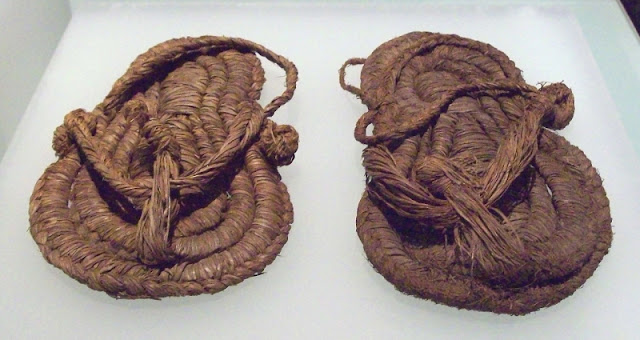
* Esparto culture in Spain: Use of the esparto plant for weaving goes back at least 7,000 years, when baskets and shoes of that age were found in a cave, Cueva de los Murciélagos, Albuñol, Granada. Declared a 'national fiber,' it is known for making the best quality ropes and a host of other items such as shoes, furniture, open weave snail baskets for collecting snails, and waterproof esparto canteens that were used to carry water. The list of esparto items is much longer, but a student will find this out when they pick this topic.
------------- PICTURE GALLERY -------------
ROPE: 40 ka
Direct evidence has been found of rope strands from the late Middle Paleolithic. Microscopic photos confirm that sophisticated rope-making was taking place before the Upper Paleolithic. (Hardy et al., "Direct evidence of Neanderthal fibre technology...")


LEFT: Reconstruction of a Neolithic loom around the time that Otzi, the Neolithic frozen 'ice man' natural mummy, was alive (ca. 3300 BCE),
RIGHT: Clothing woven by this loom, in archeoParc in Schnals, South Tyrol, Italy.
(archeoParc Val Senales - Ötzi Museum)

A few examples of knots from an old Larousse book no longer under copyright. This shows the virtually infinite number of combinations of rope and knotting that are possible

A finished weaverbird's nest.

Detail of the above finished bird nest.

Kendall Jenner at the Met Gala.

"Basket, Apache people, Arizona, ca. 1900,
coiled willow and devil's claw - Chazen Museum of Art."
coiled willow and devil's claw - Chazen Museum of Art."
Examples Of Different Fish Traps (Tools) From Around The World Made With Basket Weaving Technology.(TOP LEFT) A traditional basket for gathering snails in Southern Spain.(TOP RIGHT) Fish Trap, Aitutaki (Cook Islands).(BOTTOM LEFT) Braided fish trap, Indonesia.(BOTTOM RIGHT) "Bamboo fish pot or trap in general use in Porto Rico."


Traditional reed/fiber boats from around the world.
TOP LEFT: "Tankwa or tangwa: Traditional Ethiopian embarcation from Lac Tana, made of papyrus by Nagades people."
TOP RIGHT: "Reed boat at Ekehagen Prehistoric village outside Åsarp, Falköping Municipality, Västergötland, Västra Götaland County, Sweden."
BOTTOM LEFT: "Reed boat; exhibition in the Doria Castle of Castelsardo, Sardinia, Italy"
BOTTOM RIGHT: "Traditional reed boat on Lake Titicaca, Bolivia."

Reed and woven-fiber technology at its height.
[TOP] This large reed boat is an artist's conception of a boat docking at a Mesopotamian city around 5000 years ago. While a fanciful painting, it is probably not an inaccurate representation of the highly developed reed technology at that time.
While still in the public domain, the link to this picture is no longer available.
[BOTTOM] Like reed cathedrals, large vaulted mudhifs, as they are called, were made entirely from reeds, including the rope. The largest and best-made ones were used for ceremonial purposes and community gatherings. The interiors often displayed dazzling patterns of light as the light came through the intricate weaving work.
https://commons.wikimedia.org/wiki/File:Mudhif_Reception_Hall_(30943793762).jpg
https://commons.wikimedia.org/wiki/File:Mudhif_Reception_Hall_(30943793762).jpg

An entire indigenous pre-Incan community in South America today
(the Uru or Uros people)
made with woven-fiber technology: the boats, the houses, the clothes, and even the floating island,
(the Uru or Uros people)
made with woven-fiber technology: the boats, the houses, the clothes, and even the floating island,


A.jpg)

_Mosaic_frieze_from_the_temple_at_Ubaid_b)_The_temple_at_al-Ubaid_restored_(gay_and_fanciful,_the_gold_and_colours_vivid_against_white_walls_LOC_matpc.09950AZ.jpg)




_(14775904322).jpg)


_01.jpg)


.jpg)
.jpg)
.JPG)


.jpg)

.jpg)


