Tuesday, April 7, 2020

Homo Habilis Learned Basket Making from Weaverbirds

Evidence That Paleolithic Hominins
Lived in Close Association
With Weaverbirds
and Their Basket Making Skills

Baobab trees in Tanzanian scenery.

ABSTRACT
The purpose of this article is simple. I will argue that early hominins, almost two million years ago, lived in close proximity to Weaverbirds who built elaborate nests. And because of this, it is probable that they learned initial weaving and knot making skills along with basket making, derived from the complex and well-constructed nests of these birds.
If this is true, then the origins of basket making and weaving began almost two million years ago instead of tens of thousands of years ago, as is currently believed. And this fundamentally changes the story of hominin technology which in turn affects the narrative of human evolution.
In this article, I cite specific scientific evidence, current mainstream thought and expert opinions to make my case.


    Free Download    
A PDF of this blog-article at: 

https://unc.academia.edu/RickDoble/DRAFTS#drafts

   ALSO FREE:   
 The Illustrated Theory 
 of Paleo Basket-Weaving Technology 

 by Rick Doble 
 Download a 200-Page PDF eBook 
 -- no ads/no strings -- 
 DOWNLOAD NOW 
  Figshare  
  Academia.edu  


INTRODUCTION

"It is likely that many new Oldowan occurrences will be discovered in this century and that a range of new theoretical and methodological approaches will be applied to the earliest paleolithic record. These new lines of evidence should give us a clearer understanding of the complexity of the Oldowan archaeological record and a greater appreciation of the range of adaptive behaviors in the emergent tool-making and tool-using hominins that ultimately led to the modern human condition." (Schick/Toth,  35)

The purpose of this article is to cite scientific evidence plus generally accepted paleoanthropological thought and concepts to support the idea that hominins on the African savanna were in close contact with Weaverbirds almost two million years ago and that, as a result, hominins learned rudimentary basket, weaving and knot making skills.

This is important because it affected human evolution. As Kathy Schick and Nicholas Toth pointed out, "It is likely that this phenomenon of accelerated brain expansion in the human lineage was due to the ability of hominins to access higher quality food resources through the use of technology, which allowed for a decreased gut size and increased brain size." (Schick/Toth,  35)

In this case, baskets, for example, would have allowed hunter-gatherers to collect and bring back greater amounts of food -- and greater amounts of quality food that grew far from their camp -- than was possible without baskets.

DIRECT EVIDENCE FROM THE PALEOLITHIC


Fossilized Weaverbirds (Ploceidae) Were Found In The Oldest Layer, Bed I Layer, At Olduvai Gorge

Fossilized Weaverbirds were found in the same layer as Oldowan stone tools, indicating that Homo habilis lived there during the same time period about two million years ago.


Earliest Evidence Of Humans Thriving On The Savanna

"Humans were living and thriving on open grassland in Africa as early as 2 million years ago, making stone tools...That’s according to powerful evidence from artifacts found at Kanjera south, an archaeological site in south-west Kenya."
"To investigate whether they were standing on the site of ancient grassland, Plummer’s team analyzed the ratio of carbon-13 to carbon-12 in the soil and in the tooth enamel of the fossilized animals. Grass has a higher ratio than trees and shrubs. Both the soil and the tooth enamel of fossilized animals had similarly high ratios."
“'These tests showed that the Kanjera site was over 75 percent grassland 2 million years ago and that the wider area was teeming with zebras, antelope, and other grazers,' says Dr. Plummer."

Barley, Shanta. "Earliest evidence of humans thriving on the savanna."
New Scientist, 2009, https://www.newscientist.com/article/dn18018-earliest-evidence-of-humans-thriving-on-the-savannah/#ixzz6Iv2exzul
Accessed 4/7/2020.

EVIDENCE FROM CONTEMPORARY
HUNTER-GATHERERS


Contemporary Hunter-gatherers as Models for Paleolithic Behavior
"Using modern primates and hunter-gatherers [ED: such as the Hadza] as models, most paleoanthropologists believe the bulk of the diet of early hominin populations consisted of plant resources such as berries, fruits, nuts, leaves, pith, flowers, shoots, seeds, and gum, as well as underground resources such as roots, tubers, corms and rhizomes." (Schick/Toth,  31)
About The Hadza
"The Hadza’s homeland lies on the edge of the Serengeti plains...close to Olduvai Gorge, one of the most important prehistoric sites in the world, where Homo habilis – one of the earliest members of the genus Homo – was discovered to have lived 1.9 million years ago. Genetically...they are one of the ‘oldest’ lineages of humankind.They speak a click language that is unrelated to any other language on earth. [ED: It is considered a 'language isolate'.] "
THE HADZA
https://www.survivalinternational.org/galleries/hadza

While Toth and Schick mentioned fruits only in a general way, the following observers during the last century specifically mentioned Baobab fruit as being a major part of the Hadza diet.

Hadza Diet, Baobab Fruit, and Paleo-diet
At the end of the article entitled, "Why the Hadza are Still Hunter-Gatherers" is "Table 1. Descriptions of the Hadza through time." In these descriptions by ten different observers for about a century (1911- 2002) fruit from the Baobab tree was mentioned as a key part of their diet. Two other observers who did not mention the Baobab fruit specifically used only general terms for foraged food such as fruits. Also at the end of the article (Figure 2) a pie-chart stated that the Baobab fruit averaged 13.5% of the Hadza diet and honey averaged 21.4% of their diet -- the honey being most often found in crevices of the Baobab tree. (Marlowe, Table 1, Figure 2 )
"The Hadza of Tanzania are the world’s last full-time hunter-gatherers. They live on what they find: game, honey, and plants, including tubers, berries, and Baobab fruit."
Gibbons, Ann. "The Evolution of Diet." National Geographic,
https://www.nationalgeographic.com/foodfeatures/evolution-of-diet/
Accessed 4/7/2020.
In the following discussion of Oldowan tools and culture, Dr. Plummer makes the assumption that Baobab trees were part of the Paleo-landscape and uses the way of life of contemporary African Hadza hunter-gatherers to illustrate his points and to suggest that Homo habilis and/or Homo erectus may have done the same millions of years earlier. 
"Woody plants that are likely to have provided food to hominins (E.G., Adansonia digtata, Baobab, providing fruit...) are widely distributed across Africa today (O’Brien and Peters, 1999; Peters and O’Brien, 1994)." (Plummer, 123)
Both the fruit and the seeds in the fruit were/are important to the Hadza 
"The fruit and seeds from the Baobab tree (Adansonia digitata) are important dry-season food for the Hadza (Schoeninger et al., 2001a). The fruit...provides energy as well as calcium and vitamin C. Seeds from the fruit are pounded into flour and when eaten provide a rich source of fat and protein (5 of 8 essential amino acids) (Schoeninger et al., 2001a)." (Plummer, 149)
"Data on Hadza ethnobotany not only provides invaluable and timely cross-cultural information on plant use, but also enhances our understanding of early hominin paleoecology." (Crittenden, 319)
"Baobab fruit (Adansonia digitata) is consumed throughout the year and comprises 14% of the annual diet. The fruit has an inedible hard, green outer shell that accounts for approximately 50% of the total weight of the fruit (Nour et al. 1980). The inside of the fruit is composed of approximately 15–20 seeds which are covered with dry, white, chalky pulp that may be consumed in four ways: (1) directly out of the shell, discarding the hard seed inside the pulp, (2) pounded into a flour, removing the seed husks by winnowing on the surface of small piece of animal hide, (3) combining the flour with water and/or berry juice to create a sweet paste, or (4) removing the intact seeds from the dung of baboons, sun drying, and then pounding into flour. The fruit pulp alone is low in fat, protein, and fibre whereas the pulp flour (seed and pulp combined) is relatively high in fat, protein, and fibre. The fruit pulp and pulp flour are both high in simple carbohydrates (Crittenden 2009)." (Crittenden, 322)

ABOUT BAOBAB TREES, HOMININS, & WEAVERBIRDS


About The Baobab Tree

The Baobab tree is remarkable, so much so I will devote an entire blog-post to this tree that played a key role in human evolution and survival. Suffice it to say, the trees were spread across the Paleo-savanna millions of years ago. The trees seemed permanent and stable to humans as many lived a thousand years or more and each large tree provided fruit, often honey, shade, and even shelter and water. And Weaverbirds often made the branches a place for their nests.


Baobab trees on the savanna.
Baobabs dotted the African savanna while our ancestors still lolloped along on four legs. The trees would have provided them with easily gathered fruit, while branches gave shelter from rain, sun and predators. As man gradually started to stand upright (some four million years ago), it freed up his hands to shape tools...
(Watson, Kindle Locations 64-72)
----------------------------------
The world of primitive African man spread as far as his furthest travels. The biggest thing that moved in it was the elephant, and the biggest living thing that didn’t was the Baobab. The trees were as near to permanent as any living thing could be. (Kindle Locations 64-72)
---------------------------------
Take away the Baobabs, and a whole community disappears with them. Shade, shelter, food, breeding places, hunting lookouts; the loss of a Baobab is much more than the loss of a tree. (Kindle Locations 1376-1387)

About Weaverbirds


Baobab tree with weaverbird nests.

"Three weavers regularly nest in Baobabs, while a few others occasionally do so.
Weavers that regularly breed in Baobab trees:
Red-billed Buffalo-Weaver Bubalornis niger
White-billed Buffalo-Weaver Bubalornis albirostris
Red-headed Weaver Anaplectes rubriceps"
Weavers Breeding In Baobabs. Weaver Watch, weavers.adu.org.za.
http://weavers.adu.org.za/spcat.php?spc=22
--------------------------
"Near human habitation Baobabs are occasionally taken over by...breeding colonies of Black-headed (or Village) Weavers, seeking their protection from predators by proximity to mankind."
(Watson, Kindle Locations 1371-1374)
--------------------------
"The Village Weaver inhabits bushy savanna...It is frequently associated with human habitation in west and central Africa."
Village Weaver Ploceus Cucullatus. Weaver Watch, weavers.adu.org.za.
http://weavers.adu.org.za/sp.php?spp=797
 Weaverbirds and a finished nest.

WHAT WEAVERBIRDS COULD HAVE 
SHOWED HOMININS

While all Weaverbird nests are well crafted and intricate, the Village Weaverbird nest is the best known and most widely studied. The birds use a variety of techniques and materials to do the job. Early hominins could have learned a number of techniques by observing Weaverbirds building nests and by studying abandoned nests that may have fallen to the ground or that may have been taken from the Baobab tree branches.


(Left) A Village Weaverbird makes a nest. (Right) Detail.

The following gives only the briefest overview of the complexity of a Village Weaverbird nest.
"The outer shell of the nest is woven by the male of long strips torn by him from the leaves of giant grasses or palms. The general external appearance of the nest...is ovoidal or kidney-shaped in form with a bottom entrance...Just within the roof of the external shell the male thatches a special ceiling of short, broad strips of grass leaves. The ceiling is not woven, and in some parts of Africa may be thatched of dicot leaves in addition to the use of strips of grass." (Collias/Collias, 571) "There are five stages to the building of the outer shell of the nest by the male: (1) initial attachment, (2) roof and egg or brood chamber, (3) antechamber, (4) entrance, and (5) entrance tube." (Collias/Collias, 573)


Example of Weaverbird knots.
"The Weaving of the Red-Billed Weaver Bird in Captivity."
(Friedmann, 363)

Weaverbird nests.

SUMMARY


-- Fossil evidence shows that Homo habilis and Weaverbirds lived during the same time period at Olduvai Gorge about two million years ago. Fossil evidence also shows that the savanna environment existed during the same time period.
-- Paleoanthropologists agree that early hominins probably ate fruit from the Baobab tree as a key part of their diet, as contemporary African Hadza hunter-gatherers do today.
-- This means that early hominins were often in the vicinity of Baobab trees.
-- Weaverbirds regularly nest in Baobab tree branches and often prefer to be close to humans there.
-- Therefore: Early hominins were familiar with Weaverbirds and the various nests that these birds made which makes it quite likely that hominins learned how to construct woven fiber containers based on the birds' examples. 

CONCLUSION


If it is agreed that early hominins lived in close proximity to Baobab trees, where Weaverbirds also nested, then many things follow from that association. I believe that early humans would have developed an early rudimentary form of basket making based on examples by Weaverbirds who lived in the branches above them. The birds would not only have shown them finished sturdy nests, but how to make these nests, and how to tie secure knots, which materials on the savanna to use, and how to process those materials. In addition, abandoned nests would have fallen to the ground and would have been used and examined.

Containers would have been so useful to hominins who walked upright and could carry these containers or baskets, that it seems unlikely they would not have developed such a technology. In his book, Human Universals Donald Brown lists containers as one of the eight universal technologies common to all cultures. Anthropologist Dr. George P. Murdock, who developed the Cross-Cultural Survey, lists weaving as one of the four basic universal technologies in all cultures.

Furthermore, the long-living Baobab tree with its remarkable resources gave hunter-gatherers a stable and predictable environment for generations, and that could be used most of the year if they moved from Baobab grove to grove as the Hadza do today. It is no wonder that this tree is called "The Tree of Life" in Africa.
From my point of view, this means that hominins, starting perhaps with Homo habilis, had the resources, the materials, the models, and even the instruction for basket making -- along with a degree of stability which allowed them to work on the time-consuming skills of basketry. 
My theory, however, does not end here. The sequential steps of processing, that basket making involves, led eventually to an understanding of linear time -- unique among the animals. I have written that processes such as basket making and stone tool making led to a sophisticated and unique understanding of time which allowed humans to plan and coordinate their activities. 
The Importance of Processes
in the Paleolithic Era


AFTERWORD

One cannot overemphasize the importance of basket making which may have evolved into weaving. It is now assumed that textile weaving began thousands of years before the latest confirmed find of clay fragments that showed impressions of weaving that were dated at 27kya. These showed sophisticated weaving techniques that must have been developed thousands of years earlier. 

But whenever it started, it led to a nunber of complex and flexible technologies. By the Neolithic period shoes, clothes, baskets, fences, roofs, boats, and houses could all be made with a weaving and basket-like technology. For example, large round boats known as 'basket boats' were in use in the earliest days of the Sumerian civilization. 

Please see the following article for a full discussion of the above:


Evidence for a Basket Weaving
and Woven-Fiber Technology
in the Paleolithic Era

And from its early beginnings basket making would have influenced technology, concepts, metaphors, and language. 


For example, at the Beyond the Basket conference in 2009, Mr, Heslop stated: “Beyond its practical uses, basketry has arguably been even more influential on our lives, since it relies on the relationship of number, pattern and structure."University of East Anglia. "Basket Weaving May Have Taught Humans To Count." ScienceDaily. ScienceDaily, 8 June 2009. <http://www.sciencedaily.com/releases/2009/06/090604222534.htm>.

So it may have also led to an understanding of geometry as well as an understanding of the "grid." The avid basket makers, the Babylonians, were the first to divide the sky into sections based on the circle -- and then further divide the sky into hours, minutes and seconds -- the very first grid and the one that astronomers still use today. 

The later basic understanding of putting fibers or materials at right angles (the key to weaving) was a masterful insight that was critical. While the principle is simple and seems obvious, it was a construct of the human mind.


As the famous architect Antoni Gaudi said:
“There are no straight lines or right angles in nature.”


My guess and this is only a guess, is that basket making began in a fundamental form with Homo habilis or hominins of that time period. These early baskets were probably made with a 'random weave' which involved tangling strands of fibers together along with some basic knots learned from the Weaverbirds. This technique was used to make baskets for carrying berries and foraged food. The right-angle construction of warp and weft (or also called 'woof') which was part of weaving probably did not happen until much later, perhaps with Homo erectus as this would have been a major breakthrough.

_____________________________________________________________________________


WORKS CITED

Collias, Nicholas E. And Collias, Elsie C. "An Experimental Study Of The Mechanisms Of Nest Building In A Weaverbird." Auk. Vol. 79, The Auk: Ornithological Advances, 1962.

Crittenden, Alyssa N. "Ethnobotany in evolutionary perspective: wild plants in diet composition and daily use among Hadza hunter-gatherers." Wild Harvest: Plants in the Hominin and Pre-Agrarian Human Worlds, Hardy, Karen; Martens, Lucy Kubiak (Eds.). Oxbow Books, 2016.

Friedmann, Herbert. "The Weaving of the Red-Billed Weaver Bird in Captivity." Zoologica:. Scientific Contribution of the New York Zoological Society, Volume II, Number 16. The Society, The Zoological Park,, New York, 1922.

Marlowe, Frank. "Why the Hadza are Still Hunter-Gatherers." Ethnicity, Hunter-Gatherers, and the “Other”: Association or Assimilation in Africa, Sue Kent (Ed.) Washington D.C.: Smithsonian Institution Press, 2002, pp 247-275.

Plummer, Dr. Thomas. "Flaked Stones and Old Bones: Biological and Cultural Evolution at the Dawn of Technology." Am J Phys Anthropol. 2004;Suppl 39:118-64.

Schick, Kathy, and Toth, Nicholas. "THE OLDOWAN: Case Studies into the Earliest Stone Age."  Stoneage Institute Publication Series, Schick, Kathy and Toth, Nicholas (Eds.). Stone Age Institute and Indiana University, Stone Age Institute Press, 2006.

Watson, Rupert. The African Baobab. Penguin Random House South Africa. Kindle Edition.




Sunday, January 5, 2020

How Did a Sense of Time Develop in the Paleolithic Era?

A Critical Question:
How Did a Sense of Time Develop
in the Paleolithic Era?


ABSTRACT: This short article makes the following point. No matter what hypothesis you believe concerning the evolution of hominins, there must be an explanation for how hominins became fully aware of linear time during the Paleolithic era and used this awareness for planning and coordination. Without such awareness, the transition from animal behavior to behavioral modernity would not have been possible. At the moment there are almost no papers that deal with this issue other than my own.

This blog post is going to be short and sweet yet no less important than my other posts on this subject.

When I started this blog seven years ago, I did so to investigate the "human experience of time." It was clear to me that animals and children, for example, experienced time very differently from adults. It was also clear to me that humans were the only animal that had a sense of linear time with a past, present, and future, that we also had an understanding of duration and that we could coordinate and plan activities because we had the shared concepts in our languages. And we understood the all-important meaning of 'when' -- when in the past, when in the present, and when in the future. 


This is a rather fanciful mural of Upper Paleolithic artists as they painted polychrome mammoth figures on the walls of the Font de Gaume cave in France. However unrealistic, this painting, made in 1920 by famed illustrator Charles R. Knight and exhibited in the equally famous Museum of Natural History in New York, made the creation of these cave drawings come alive. This mural may have helped fire the imagination of modern paleoanthropologists so that they now understand better how these paintings were made and as a result have come to a more accurate understanding.
File:Font-de-Gaume.jpg

During the past year, I have suggested how early humans, hominins, could have emerged from living in the present, as all animals do, to acquiring a sense of time. I have suggested that it came about as a result of processes or technologies, such as stone-tool making, that proceeded step-by-step and whose steps were dependent on each other. These processes provided an experience of working with time and also became models and metaphors for the progression of time. I believe the use of increasingly sophisticated processes and the acquisition of a shared understanding of linear time happened gradually and took millions of years.

I have also suggested that in addition to stone-tool technologies that we know a lot about, there were many more processes used by women such as basket-weaving, food gathering and various woven-fiber processes. The only problem is that we have to speculate about the technologies that used wood or fibers or animal skins because those materials decayed and left no trace after millions of years.

Which brings me to the point of this article. While some might disagree with my ideas, a basic irrefutable fact remains which must be explained. 

That fact is simple: 
How did early humans, let's say Homo habilis, who lived in the immediate time of animals, evolve into modern Homo sapiens sapiens with a linear sense of time?

I would argue that culture, language, planning, coordination, advanced technologies, art, mythology and storytelling -- i.e., all the things that comprise modern human behavior -- could not have happened without an understanding of linear time.

Many have suggested that modern behavior began in full when a complete early language developed. Yet all such languages contain words to express linear time.


Time reference is a universal property of language...
Jacqueline Lecarme, Ph.D., Linguistics

In other words, a sense of linear time was crucial and a linchpin when it comes to understanding behavioral modernity.


I believe that no explanation of the development of behavioral modernity is complete without a comprehensive explanation of how humans developed a linear sense of time, and further how that sense of time, once established, developed within cultures and civilizations.

A search of the Internet showed that there were virtually no studies or papers relating to this transition from the immediate 'now' time that animals live in (and that we once lived in) to an early concept of continuous linear time, except my own here on this blog and my papers at academia.edu and at figshare.com.

In his book, Time in History: Views of Time from Prehistory to the Present Day, Gerald Whitrow states the situation very clearly but does not attempt to explore this transition in detail:

"Man must have been conscious of memories and purposes long before he made any explicit distinction between past, present, and future."

"It must have required enormous effort for man to overcome his natural tendency to live like the animals in a continual present."

And, in a sense, he also warned us to be careful about making modern assumptions about people who lived 50 or 100 thousand years ago:
"Giambattista Vico [ED: a history philosopher] believed that every theory must start from the point where the subject of which it treats began to take shape." 

Above quotes from:
Whitrow, Gerald. Time in History: Views of Time from Prehistory to the Present Day. Oxford, UK, Oxford University Press. 1988, pages 21, 22, 159.

This last quote means that paleoanthropologists need to forget about modern timekeeping and modern and abstract conceptions of time. Instead, they need to place themselves back into the past and see the world through the eyes of an Upper Paleolithic hunter-gatherer who on occasion emerged from momentary existence into an understanding of time that was continuous with a past, present, and future.

This photograph of hands painted on the walls of a cave is from the Upper Paleolithic Cueva de las Manos (Cave of Hands) in Argentina. These hands, which were 'spray' painted over thousands of years, have a powerful spiritual meaning. Other caves around the world also have such imagery. The power of these overlaid hands might hold a clue to the world view of early modern people.


Sunday, December 22, 2019

The Tribal-Wide Use of Processes in the Paleolithic Era

The Tribal-Wide Use of Processes
in the Paleolithic Era

    Free Download    
A PDF of this blog-article at: 

https://unc.academia.edu/RickDoble/DRAFTS#drafts

   ALSO FREE:   
 The Illustrated Theory 
 of Paleo Basket-Weaving Technology 

 by Rick Doble 
 Download a 200-Page PDF eBook 
 -- no ads/no strings -- 
 DOWNLOAD NOW 
  Figshare  
  Academia.edu  


MY PREVIOUS POINTS

In my last four blogs (see links at the bottom) I made the argument that Paleolithic *processes* were at the heart of human evolution. They began with the stone-tool technology of Homo habilis and have continued up to today. 

I have further argued that these processes evolved and became more complicated as the brain of hominins grew larger. And with the help of their brain's unique large prefrontal cortex, hominins began to understand the workings of linear time -- time with a past, present, and future -- since processes proceed step-by-step in linear time.

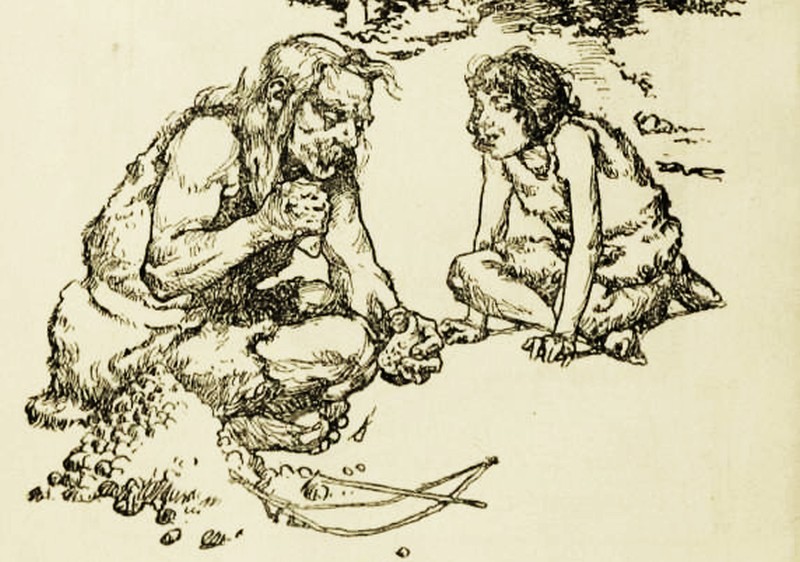
Primitive man making tools and teaching children 
from the Museum of Vietnamese History, Ho Chi Minh City, Vietnam.

I have also said that since we know that there was one well-developed process, that of stone-tool making, for which we have ample evidence and that has been well documented, it is also likely that there were other processes. These processes which created perishable artifacts -- made with materials such as wood, fiber, and animal skins -- have not survived because the objects would have decayed and left no trace.

MY NEW POINT

All of the above implies one major additional point. If the above statements are true, then the entire tribe of people would have probably been familiar with processes: from men (presumably) making stone tools to women (traditionally) harvesting and preparing food to children learning and helping in the making of processes.

An example of other processes:
-- While paleoanthropologists have assumed that men were making stone tools, they have also assumed that there was probably a division of labor. Women, in general, were in charge of finding food and preparing food. And this was a process all its own. Assuming that women's skills were as advanced as stone-tool making, they would have evolved their own food gathering and preparation processes.
-- In nomadic tribes women would probably have known which plants were best for eating at a certain time of year in each of the different nomadic environments. They would also have known the location, the right time to harvest, how to harvest (with special tools perhaps), how to carry the harvest and then how to prepare the plants for a meal (also with special tools perhaps). These food-related processes may have been as sophisticated as the stone tool technology at the time.
In addition, children probably helped and were taught about these processes from an early age. 


An elder shows a boy how to make stone tools.
"In a hunter-gatherer society, the hunters were usually men and the gatherers women (according to the latest research) -- although these roles were a bit flexible. This model, however, does not assume that men were dominant as a recent study has shown."
Devlin, Hannah. "Early men and women were equal, say scientists." The Guardian US, New York, NY, May 14, 2015.https://www.theguardian.com/science/2015/may/14/early-men-women-equal-scientists
Here is a hypothetical example of two early processes during the Homo habilis time period: 
Just like the men knowing where to look for stones for stone tools, the women would know where to look for promising vegetation. Like the men knowing which stones to break open, the women would know which plants and parts of plants (such as seeds, nuts, and roots) to use for food along with gathering larvae, eggs, and honey. And like the men breaking the core stones apart the women would know how to harvest. And also like the men knowing which tool was best for skinning an animal or cutting down a small tree, the women would know how to prepare the food for eating.

Later when hominins began to use fire, she would also have needed to know how to find wood, work with coals, and keep a fire going even if the wood was green or wet. This was probably a shared responsibility with her mate, but it was a skill that she needed to master as well. And fire added another level to a woman's food processes -- with cooking, baking, curing, etc. In many societies, women had a special relationship with fire that was revered by the community.


A diorama of a cavewoman starting a fire: 
National Museum of Mongolian History, Ulaanbaatar, Mongolia.
The expression, "Keep the home fires burning," still used today, refers to a woman maintaining a warm fire in the fireplace when her husband is away and what he will find when he returns. Also the expression 'home and hearth' implies the same relationship.
Vestal Virgins 
While we cannot know what occurred in the Paleolithic era, it is clear that women had a special relationship to fire in many ancient societies. In Rome, for example, the Vestal Virgins kept an eternal flame alive. The Romans believed that keeping the fire going protected Rome. This ritual was at the center of Roman culture and it lasted for more than 1000 years until just before the fall of Rome (700 BCE - 391 CE). The ritual was in honor of the Goddess Vesta, an ancient Roman Goddess of hearth, home, and family. She was rarely depicted in human form but instead as a flame or fire itself, recalling what many anthropologists believe were the most ancient animistic beliefs of the earliest human cultures.
If women had their own processes in addition to the male processes of stone-tool making, this means that the idea of processes was tribal-wide. So the experience of working with processes, i.e., processes as a metaphor and processes as a model for the progression of linear time was something that was understood by everyone in the tribe. There also had to be a method for teaching about processes so that this information could be passed down from generation to generation.

And because this understanding was tribal-wide, the experience of working with processes was something that everyone could share, refer to and communicate about. So since men, women, and children all worked with processes, they could communicate with each other using various processes as a point of reference.

This is an important point because the later leap, so to speak, into behavioral modernity required that everyone in the tribe understood the developing language and the emerging culture. Working with processes would have provided that common experience and ways of communicating which then led in part to a fully developed language.

A 'cave' family sitting around a fire.

As I have written earlier, working with processes would also have led to an understanding of linear time, since all processes involve linear time (past-present-future and duration) in their step-by-step procedures. And this understanding of time was critical for the development of a full language, the development of culture and for achieving modern human behavior.


"Time reference is a universal property of language..."
Jacqueline Lecarme, Ph.D., Linguistics

The death of a tribe member.

It is also possible that various rituals were based on the idea of processes. When a person died, for example, a certain ritual, which had to be performed in a specific order, was required. Such a ritual conformed in many ways to the step-by-step sequences in a process. But in this case, the desired outcome of the process was to influence spiritual or supernatural elements.

________________________________________________________________________

AFTERWORD

The Consequences Of Developing Processes

Working with and using processes had many ramifications besides an understanding of time and a possible language associated with it.

Working with processes meant that hominins were discovering different qualities in different materials. Some rocks broke apart to make a tool with sharp edges, for example, but most did not. As a result, hominins may have felt that each material had its own nature or as we would say its own properties. 

Working with processes also meant that humankind was now beginning to make the environment adapt to its needs rather than humans adapting to the environment, like most of nature. 

"The Oldowan [ED: i.e., the first stone tools] represents the first instances of technological innovation in human history, wherein our ancestors first began to enhance their biological abilities with the manufacture of stone tools."
Turcotte, Cassandra M. "Oldowan Stone Tools." The Center for the Advanced Study of Hominid Paleobiology (CASHP).
http://www.bradshawfoundation.com/origins/oldowan_stone_tools.php

Eventually, this may have led to a sense that people were different from the other animals and separate from nature which in turn led to a sense of separateness and superiority. This was both empowering and frightening. The basic sense of connectedness to nature had been altered and humans would have to find a way to mend that gap. 

This then may have led to an animistic sensibility which the study "Hunter-Gatherers and the Origins of Religion" (reference below) said could have existed even before a fully developed language. Everything in nature had different properties and it was the task of hominins to understand or discover what those properties were.

Each person and each element in nature was seen to be alive with a unique spirit of its own. So this may have given rise to an animistic sensibility which is now seen as the most basic spiritual state (see reference next) although it is not a religion. This eventually, however, may have led to the beginnings of religion. In this view, animals, trees and rivers would have been seen as having a spirit, just like human beings but each with its own nature. And it was the job of humans to understand this nature and to work with it.

"Results [of our study] indicate that the oldest trait of religion, present in the most recent common ancestor of present-day hunter-gatherers, was animism...  [Next a] belief in an afterlife emerged..."
Peoples HC, Marlowe FW, Duda P. "Hunter-Gatherers and the Origins of Religion."
Department of Archaeology and Anthropology, University of Cambridge, Cambridge, UK. Published online: 6 May 2016 open access at Springerlink.com.
https://link.springer.com/article/10.1007/s12110-016-9260-0

Eventually, the loss of connectedness may have led to the beginnings of religion, which was, in part, an attempt to bridge that gap: to find an explanation about why humans were different from the rest of the animal kingdom and to console people about the inevitability of death.

Speaking about the much later Paleolithic temple, Gobekli Tepe, Charles Mann "suggests that the human impulse to gather for sacred rituals arose as humans shifted from seeing themselves as part of the natural world to seeking mastery over it."  
Mann, Charles. "The Birth of Religion." National Geographic Magazine, June 2011, https://www.nationalgeographic.com/magazine/2011/06/gobeki-tepe/

About Animism
"Our results reflect Tylor’s(1871) belief that animism was the earliest and most basic trait of religion because it enables humans to think in terms of supernatural beings or spirits. Animism is not a religion or philosophy, but a feature of human mentality, a byproduct of cognitive processes..."
Peoples HC, Marlowe FW, Duda P. "Hunter-Gatherers and the Origins of Religion."
Department of Archaeology and Anthropology, University of Cambridge, Cambridge, UK. Published online: 6 May 2016 open access at Springerlink.com.
https://link.springer.com/article/10.1007/s12110-016-9260-0

About Reconstructing The Past
"Giambattista Vico [ED: a history philosopher] believed that every theory must start from the point where the subject of which it treats began to take shape." 
Whitrow, Gerald James. Time in History: Views of Time from Prehistory to the Present Day. Oxford, UK, Oxford University Press. 1988, page 150.


_________________________________
My Blogs About Processes 
And The Development Of Language 
And Behavioral Modernity


Animal Senses Compared to the Human Sense of Time

The Importance of Processes in the Paleolithic Era

Paleolithic Evidence for an Early Weaving Technology
Paleolithic Evidence Shows That Homo Habilis Could Have Learned Weaving From Weaverbirds (Ploceidae)

Evidence for a Basket Weaving
and Woven-Fiber Technology
in the Paleolithic Era

The Origins of Language: 
When, Why and How


Saturday, November 23, 2019

The Importance of Processes in the Paleolithic Era

The Importance of Processes
in the Paleolithic Era

    Free Download    
A PDF of this blog-article at: 

https://unc.academia.edu/RickDoble/DRAFTS#drafts

   ALSO FREE:   
 The Illustrated Theory 
 of Paleo Basket-Weaving Technology 

 by Rick Doble 
 Download a 200-Page PDF eBook 
 -- no ads/no strings -- 
 DOWNLOAD NOW 
  Figshare  
  Academia.edu  

ABSTRACT: A sense of linear time with a past, present, and future plus a sense of duration was an essential element of behavioral modernity. Modern human behavior could not have occurred without it. This sense of time was necessary for planning and coordination. But how did Homo sapiens develop this sense of time that was so different from the animal world that they were a part of? In this paper, I argue that the hominin sense of time developed over millions of years and developed because of their familiarity with processes such as stone-tool making. I am assuming that they developed a variety of other processes as well and each process had a step-by-step way to proceed. I am also assuming that as processes developed, they became more complicated and in addition, a proto-language and a concept of time immerged which gave them greater control and also the conceptual tools to modify and improve these processes. In short processes with their step-by-step structure became the model for linear time and time duration.

NOTE: This blog repeats a number of ideas about processes that were touched on in previous blogs, but goes into much more detail about the nature of Paleolithic processes.


INTRODUCTION

The role of processes in the life of hominins in the Paleolithic era is one of the key factors that influenced increasingly complex cognition, planning, sharing and communication and eventually led to modern human behavior that is known as behavioral modernity. 

While I have suggested in previous articles that weaving processes began early on, this is theoretical. It does not matter which processes were involved. It is the nature and the dynamics of processes that are important and not any particular one or kind.

Processes have a dynamic all their own. They can start very simply with just a few steps and eventually evolve into complicated procedures with many steps and conditions. And this is exactly what happened with the one Paleolithic process we do know a lot about, that of stone-tool technology.

Google Word Definition
Process:
-- a series of actions or steps taken in order to achieve a particular end --

This short definition says it well. A process requires a series of actions in a sequence that must be learned and then executed. And at the same time, the practitioner must have a clear idea of the end result. This, among other things, requires a sense of time and procedure. It also requires planning. In addition knowledge of a process must be taught to the next generation if the use of the process is to continue.

Example Of How Processes Expand 
And Become More Complex With More Steps
PROCESS DIAGRAM: PROJECT TINKERTOY (Early 1950s)
https://commons.wikimedia.org/wiki/Category:Project_Tinkertoy
Project Tinkertoy facility - "Code-named Project Tinkertoy, the major objective of the program was the design and construction of a pilot plant compatible with the principles of modular design and mechanized production of electronics... NBS intended to develop a process for automated manufacture of electronic equipment and to demonstrate it on a pilot production line."
National Institute of Standards and Technology
See a full video about Project Tinkertoy


THE EVIDENCE FOR STONE-TOOL PROCESSING 
IS CLEARLY ESTABLISHED

We do know for certain that Homo habilis (perhaps the earliest hominin) had mastered an initial process, what we might call an entry-level process, i.e., that of Oldowan stone-tool making. And they were able to teach and communicate this skill from generation to generation. 

While the Oldowan stone-tool technology has often been characterized as crude, it nevertheless required a number of specific steps, in order, to make useful tools. And these required a good deal of skill to get the desired results.

HOW MUCH SKILL WAS INVOLVED?
"Recent studies have shown, however, that even among the oldest sites flakes do indicate high levels of skill. For example, at Gona, Ethiopia, material dated to 2.5-2.6 myr represented skillfully flaked lava cobbles (Schick and Toth, 2006; Semaw, 2000)...Evidence suggests that skillful flaking and forethought were components of human tool production even as early as 2.5 million years ago..."
Turcotte, Cassandra M. "Oldowan Stone Tools." The Center for the Advanced Study of Hominid Paleobiology (CASHP). http://www.bradshawfoundation.com/origins/oldowan_stone_tools.php
 "A juvenile capuchin monkey (Sapajus libidinosus) using a stone as tool to open a seed."
Some animals use basic tools such as a rock or a twig. 
But they do not have the ability to make a complex tool when many steps are required.


ABOUT OLDOWAN STONE-TOOL TECHNOLOGY

The simple Oldowan stone-tool technology marked a major step, if not the crucial step, which eventually resulted in culture and civilization today.

If we are to understand that this technology was a *process* as I have said, we need to understand the steps that were involved. And this is especially important because this initial process became the underlying structure that led to many more processes in the Paleolithic era.

Hammerstone (left), striking the core with the hammerstone (middle), 
the core and a flake (right) in a later stone-tool process.
To begin the stones that were often used were river pebbles. Choosing the right stones was crucial and it appears that Homo habilis became quite skilled at this.
Hammerstone: This was the stone that was used to strike the core and break off a flake. This stone was round, fat, hard and could be easily held in the hand. It also would not shatter.
Core: The core was the stone that was struck. The core was generally a crystalline stone such as quartz, basalt, flint or chert. Obsidian was particularly desired as it made the sharpest edge. Naturally, it depended on what was available. The abundance of these kinds of rocks that were used for these tools shows that Homo habilis knew the difference between rocks. They understood which stones were best for holding a cutting edge.
Striking the Core: The core had to be hit at just the right angle, at a certain point and with the correct amount of force. Hitting the core could produce sharp flakes that became tools in themselves or the core could be hit in such a way that when a flake was removed, the core was left with sharp cutting points. This was then called a chopper and may have been used to cut plants or chop a tree or butcher an animal.
Flake: The flake was the fragment that split off from the core. Producing a flake with a sharp edge was often the reason for hitting the core. A flake was then a tool in itself which could be quite sharp, as sharp as a surgical knife today, depending on the core's material.
Handling these tools: The blunt side was called the proximal surface and the sharp surface was called the distal surface. The proximal surface was held in the hand and then the sharp distal surface was used to cut.
Conchoidal fracture: The fracture this process produced is known as a 'conchoidal fracture' which does not happen in nature and can only be produced by a deliberate sharp impact. This kind of fracture makes a solid tool that keeps its integrity and is not prone to breaking apart. And because this does not occur in nature, it is clear that these tools were man-made.
The general name for this kind of technology is percussion technology.
Examples of choppers made from the core.

Homo habilis - forensic facial reconstruction (left). 
One of the ways that the chopper might have been used (right).
"The Oldowan represents the first instances of technological innovation in human history, wherein our ancestors first began to enhance their biological abilities with the manufacture of stone tools...Tool production and use is thought to be intimately linked to, if not the instigator of, major changes in cognitive development..."
Turcotte, Cassandra M. "Oldowan Stone Tools." The Center for the Advanced Study of Hominid Paleobiology (CASHP). http://www.bradshawfoundation.com/origins/oldowan_stone_tools.php
EARLY STONE-TOOL PROCESS EVOLUTION
The initial Homo habilis stone-tool process: 
The Oldowan Technology
"These early tools were most likely used to help these humans butcher animals...cut up plants, and even do some woodworking...Stone is simply pretty good at standing the test of time, but it would not have been the only thing these people used in their daily lives. It is likely that a whole range of material spanning from skin and bark [were] used to create containers; wood used to create digging sticks, spears or clubs; and digging tools made out of horn or bone were also used."
The next and more complex Homo erectus process: 
The Acheulean Technology
"While the Oldowan was still in full swing...Africa became the initial host to a second tool industry: the Acheulean (c. 1,7 million years ago to c. 250,000 years ago)...It saw the development of tools into new shapes: large bifaces like hand axes, picks, cleavers and knives enabled the contemporary Homo erectus...to literally get a better grip on the processing of their kills and gatherings. More precisely shaped tools meant a more delicate technique was needed; and indeed, softer materials such as wood, bone, antler, ivory, or soft stones, were now used as percussors in what is known as the soft hammer technique."
Groeneveld, Emma. "Stone Age Tools." Ancient History Encyclopedia Limited, 21 December 2016. https://www.ancient.eu/article/998/stone-age-tools/
It is important to note that In the Acheulean stage, stone-tool making had now developed so that hominins were making tools to make the tools, known as meta-tools -- a critical meta-step in the technology. So this process was not only more complicated but it included another level of cognition and planning.

OTHER PROCESSES

While we do not know exactly what other processes Homo habilis and the later Homo erectus used, we can be reasonably sure that these early hominins did use other processes in their daily lives. We know for certain that they mastered the process of Oldowan stone-tool making and then later the more advanced Acheulean technology, therefore it appears likely that they would have created other processes as well.

These processes would have probably involved wood and vegetation, for example. Unfortunately, we do not have direct evidence of this due to their decay -- although cut marks on stone-tools, when viewed through a microscope, indicate that stone-tools were often used to cut plants.
"In whichever way archaeological remains are interpreted, one must always be aware that the vast majority of the materials with which prehistoric people were surrounded and with which they worked is lost to us today. ...organic materials start to decay as soon as they are deposited in the ground."
Grömer, Dr. Karina. "An Introduction to Prehistoric Textiles" Brewminate.com, Natural History Museum, Vienna, March 01, 2016, https://brewminate.com/an-introduction-to-prehistoric-textiles.
Dr. Adovasio has made the point that there is "ample ethnographic evidence that perishable technologies form the bulk of hunter-gatherer material culture even in arctic and sub-arctic environments (e.g. Damas 1984; Helm 1981). Archaeologists working with materials recovered from environmental contexts with ideal preservation clearly confirm that this is also true for the past as well. Taylor (1966:73), for example, notes that in dry caves he recovered 20 times more fiber artifacts than those made of stone, Croes (1997:536) reports that wet sites yield inventories where >95% of prehistoric material culture is made of wood and fiber, and Collins (1937) confirms the same for sites in Alaskan permafrost."
Soffer O, Adovasio JM, Hyland DC, Klíma B, Svoboda J. "Perishable Industries from Dolní Vestonice I: New Insights into the Nature and Origin of the Gravettian." Paper Prepared for the 63rd Annual Meeting of the Society for American Archaeology Seattle, Washington, 25–29 March 1998. DolniVestonice.pdf. 
I suggest that if Homo habilis could invent the Oldowan stone-tool process, they could also have created a number of other processes using natural fibers, wood, bone, etc. 

And once Homo habilis had established a life-style that relied on processes, it set hominins on a path of working with processes that would become more complicated and therefore required larger brains and the use of more areas of the brain. 

In the beginning, the skill of using these processes could have been taught through imitation and learned and repeated via "muscle memory" but later, as the processes became more complex, other areas of the brain probably became involved and eventually some form of basic proto-language developed.
According to The Evolution of Culture, very few animals possess the ability to learn via imitation. But the genus Homo was/is one of them. (The Evolution of Culture, Volume 4. Linquist, Stefan, Editor. Rutledge, 2017.)"The first obvious signs of imitation are the stone tools made by Homo habilis about 2.5 million years ago, although their form did not change very much for another million years. It seems likely that less durable tools were made before then, possibly carrying baskets, slings, wooden tools and so on." 
Blackmore, Susan. "Evolution and Memes: The human brain as a selective imitation device." Cybernetics and Systems, Vol 32:1, 225-255, 2001,Taylor and Francis, Philadelphia, PA.
THE INCREASING COMPLEXITY OF PALEOLITHIC PROCESSES
"Stone toolmaking action analyses...demonstrate the presence of cumulative cultural evolution in the Lower Palaeolithic and suggest that this accumulation displays an accelerating rate of change continuous with that seen in later human history. This should encourage interest in intrinsic processes of cultural evolution that might tend to produce such a uniform curve, including the potentially autocatalytic effects of increasing technological complexity...Lower Palaeolithic technologies clearly do increase in hierarchical complexity through time, raising the possibility of important interactions with the evolution of human cognitive control..."
Stout, Dietrich. "Stone toolmaking and the evolution of human culture and cognition." Philos Trans R Soc Lond B Biol Sci. 2011 Apr 12; 366(1567): 
https://www.ncbi.nlm.nih.gov/pmc/articles/PMC3049103/
PROCESSES LED TO LARGER BRAINS AND MORE COMPLEX COGNITION

In a landmark experiment, Dr. Dietrich Stout designed a study in which modern people who were skilled at making stone-tools in the manner of the Oldowan and Acheulean technology were observed via brain imaging as they made these tools. 
"Increasing levels of abstraction in action organization place demands on increasingly anterior portions of frontal cortex [22] and precisely this pattern of increased anterior activation has been observed in a brain imaging study comparing late Acheulean versus Oldowan toolmaking [29].This is consistent with the possibility that evolving neural substrates for complex action organization could have interacted with autocatalytic increases in technological complexity to produce a ‘runaway’ process of biocultural evolution [8,65]."
Stout, Dietrich. "Stone toolmaking and the evolution of human culture and cognition." Philos Trans R Soc Lond B Biol Sci. 2011 Apr 12; 366(1567).https://www.ncbi.nlm.nih.gov/pmc/articles/PMC3049103/

PROCESSES AND THE UNDERSTANDING 
OF LINEAR TIME

The use of processes played a critical role in the human understanding of time, an understanding that was/is unique among animals.
"Our sense of time involves some sense of duration and also of the differences between past, present and future. There is evidence that our sense of these distinctions is one of the most important mental faculties distinguishing man from all other living creatures. For we have good reason to believe that all animals except man live in a continual present."
"It must have required enormous effort for man to overcome his natural tendency to live like the animals in a continual present."
Whitrow, Gerald James. Time in History: Views of Time from Prehistory to the Present Day. Oxford, UK, Oxford University Press. 1988, pages 7 & 22.
How and why did humans leave the immediacy and comfort of their animal existence and invent language, culture, and a sense of linear time with a past, present, and future? Did it require enormous effort? I would say no.

I would argue that this transition took place gradually over millions of years. And that rather than being difficult and painful, the break with our animal past, that led to our acquisition of behavioral modernity and the modern sense of time, occurred quite naturally.

After perhaps two million years, we know for certain that the skill and technology of stone-tool making had become quite complex. And because of this, we can perhaps assume that other processes based on natural fibers and wood, etc. had also become equally complex.

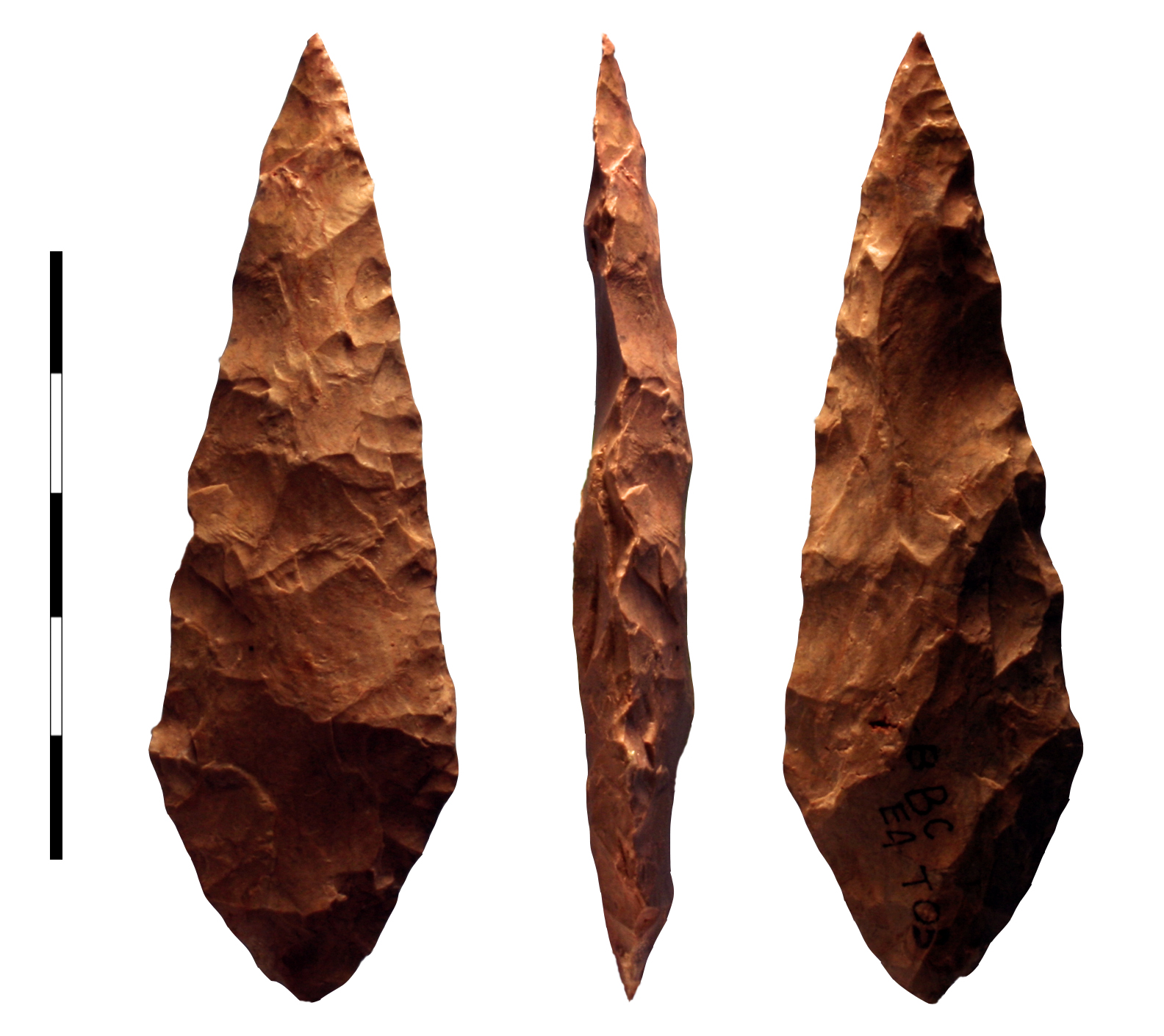
The progression of stone technology during the Paleolithic era
showing the evolution of stone tool processing.
(Left) Acheulian flint chopper, North Somerset, UK; ca. 750 kya.
(Middle) Lower Paleolithic flint stone tool, Egypt; ca.200 kya.
(Right) Bifacial silcrete point; Blombos Cave, South Africa; 71 kya.
In the late Paleolithic period, tools became even more sophisticated. As many as 80 different types of implements have been unearthed for what are called the Perigordian and Aurignacian industries in Europe. It is believed that these tools were used for hunting and butchering, clothes making, and a great variety of other tasks that moved early humankind closer to modern life. In all, hundreds of highly complex tools have been found, some of which are the prototypes for modern tools.
STONE TOOL INDUSTRY
https://www.britannica.com/topic/stone-tool-industry
While understanding an individual process was limited to particular materials and desired results, all processes involved a sense of time. Each step had to be done in a certain order, for example, and the eventual outcome was dependent on past steps that had been done correctly. Advanced processes often required precise conditions for specific durations of time -- such as the exacting heat treatment of silcrete (see below) to make it as workable as flint. The resulting stone was essentially an "artificial flint." 

AN EXAMPLE OF A LATER COMPLEX PROCESS WHICH CONTINUED TO DEVELOP

The Heat Treatment Of Silcrete For Stone Tools
Approx 130 - 60 kya

About 130 kya Paleolithic people learned to heat treat certain kinds of locally available stones. Instead of needing to use flint, for example, they, in a sense, made their own "artificial flint" by treating silcrete so that it had flint-like properties, which made it an excellent material for tools and arrows. The heat treatment made the stone harder, less prone to fracturing and easier to shape. Over perhaps 70,000 years into the Middle Paleolithic era (the time before the Upper Paleolithic cultural explosion), this technique became quite sophisticated. 

Beginning with an above-ground method of placing stones in a pile of embers, it evolved into a well crafted controlled method that used "underground heating in an earth-oven like fire-pit. (sciencedaily.com -- see reference next)" This is a good example of the evolution of a Paleolithic process and the increasing complexity, precision, and sophistication that was achieved.
The "silcrete heat treatment...may provide the first direct evidence of the intentional and extensive use of fire applied to a whole lithic chain of production."
"This heating process marks the emergence of fire engineering as a response to a variety of needs that largely transcend hominin basic subsistence requirements,"
"Early humans used innovative heating techniques to make stone blades." Science Daily. October 20, 2016.
https://www.sciencedaily.com/releases/2016/10/161020092107.htm
It was familiarity with a wide variety of processes, including stone-tool making, that eventually led to an understanding of linear time. This was crucial for the transition from animal behavior to behavioral modernity and for the development of language. 

Working with processes led to the development of a number of cognitive skills that were essential for behavioral modernity. Memory, a sense of time in terms of past, present and future along with a sense of time duration, goal-directed behavior, cognitive skills, and decision making came together as a result of managing a variety of complex and changing processes. In addition, there developed a way to teach and train each generation in these skills. Eventually, this culminated in modern human behavior including a full early language and a way to express linear time.

Example of heated silcrete stone that was then shaped 
(the same stone seen from different angles).


THE PREFRONTAL CORTEX

The Homo sapiens brain was more than twice as large as the brain of Homo habilis and 1.5 times bigger than the brain of Homo erectus. But in addition, Homo sapiens had a distinct part of the brain that was unlike that in any other animal. This part is called the prefrontal cortex. And it is only in the last decade that we have begun to understand that this recently discovered area was critical when it came to planning, cognition and understanding the linear progression of time.

I believe an ability to work with complex processes and then to innovate came about because both the larger brain and the prefrontal cortex given to Homo sapiens allowed them to do so.

A full description of the prefrontal cortex is best left to scientific sources, so what follows are descriptions from scientific websites.
"This part of the association cortex, which is implicated in higher cognition and affect, is thus disproportionately large in humans relative to other primates."
Stern, Peter. The human prefrontal cortex is special. Science. Science22 Jun 2018 : 1311-1312.
https://science.sciencemag.org/content/360/6395/1311.7
"This brain region has been implicated in planning complex cognitive behavior, ... [and] decision making...The basic activity of this brain region is considered to be orchestration of thoughts and actions in accordance with internal goals." [ED: i.e., the future]
Prefrontal Cortex. The Science Of Psychotherapy. 2017.
https://www.thescienceofpsychotherapy.com/prefrontal-cortex/
I was one of the first writers in 2014 to focus on the prefrontal cortex as a critical component in our ability to understand and conceptualize linear time. We are the only animal that has this capability. See my most popular article (more than 10,000 readers since 2014) about the prefrontal cortex: 

Animal Senses Compared to the Human Sense of Time

PROCESSES, TIME AND PROTO-LANGUAGE

After two million years, with their increased brain size and the added abilities of the prefrontal cortex, hominins began to develop a language and a set of conceptual tools that gave them greater control over their use of processes. 

In particular, language gave humans the tools to work with time. Language could express basic linear time concepts that allowed them to imagine processes, the order of the steps involved and the duration of each step. It also allowed them to imagine different outcomes and to share and discuss processes. And, of course, language was used to instruct the next generation.

Linguists and anthropologists assume that a fully developed language, even the most basic language, would have had words that expressed concepts of time. 

Anna Wierzbicka made a list of what are known as Semantic Primitives as listed by the Natural Semantic Metalanguage. The following are universal words for time that occur in all languages:  
when/time, now, before, after, a long time, a short time, for some time, moment

It is important to note that language and time concepts are closely linked. 

"Time reference is a universal property of language..."
Jacqueline Lecarme, Ph.D., Linguistics

And since processes proceed step-by-step, they became a model and metaphor for time, not unlike a clock which advances step-by-step as the hands of the clock move forward.

We can find examples of this today such as in this expression:
Your idea is half-baked. 
This comes from the process of cooking where the bread was not given enough time to bake.


CONCLUSION

Since hominins had been working with processes for millions of years, they were familiar and comfortable with them. So the eventual awareness of linear time that processes involved and the conscious understanding of the process steps evolved naturally. 

And this is why an understanding of processes is so important. Processes became the model and the metaphor for linear time along with duration. And once language and modern human behavior was achieved, humans had even greater control over their processes and their ability to control their environment. This eventually led to the Upper Paleolithic, the Neolithic and then to civilization.

________________________________________

AFTERWORD

ABOUT PROCESSES

I am quite familiar with processes. I processed my own black and white photographic negatives and then developed prints from those negatives for fifteen years. Negative processes involved time, temperature and proper handling, such as agitation. The initial spooling took place in the pitch dark.

I soon learned that what I did at the beginning greatly affected the end result. So as time went on, I became more precise. I learned to make accurate photographic exposures before developing so that the chemical process of developing produced a fine-grained thin negative with a full range of tones. And I added a couple of steps to standard developing that improved the results such as using distilled water as a pre-soak and diluting the developer for more control over the development time. 

Then I developed my own black and white slides which was even more exacting.
And finally, I developed color slides. This process was the most involved and the most precise. Color slides, for example, required that the developing solution had to be 100 degrees F +/- 1/2 degree for a very specific duration of time. 

I say all of this because I do understand how processes work and how they evolve. Whether I am talking about photographic processing or making stone-tools in the Paleolithic era or preparing esparto grass for basket weaving or for making rope, basic step-by-step procedures are common to all.

THINKING OUTSIDE THE BOX?

I realize that my ideas may seem a bit different and unusual to Paleoanthropologists, but consider:
"Tools are the products of our brains, and we have millions of stone tools," Wynn added. "What we need are more creative ideas on how to extract understanding from them, and what they tell us about our evolution." Quotation from paleoanthropologist Thomas Wynn of the University of Colorado at Colorado Springs.
Choi, Charles. "Human Evolution: The Origin of Tool Use." LiveScience, November 11, 2009. https://www.livescience.com/7968-human-evolution-origin-tool.html. Accessed 10/26/2019.
A Caveat: While I believe that Homo sapiens became aware of linear time and were able to use it to their advantage, their sense of time was quite different from our own. I discuss this in other articles I have written.